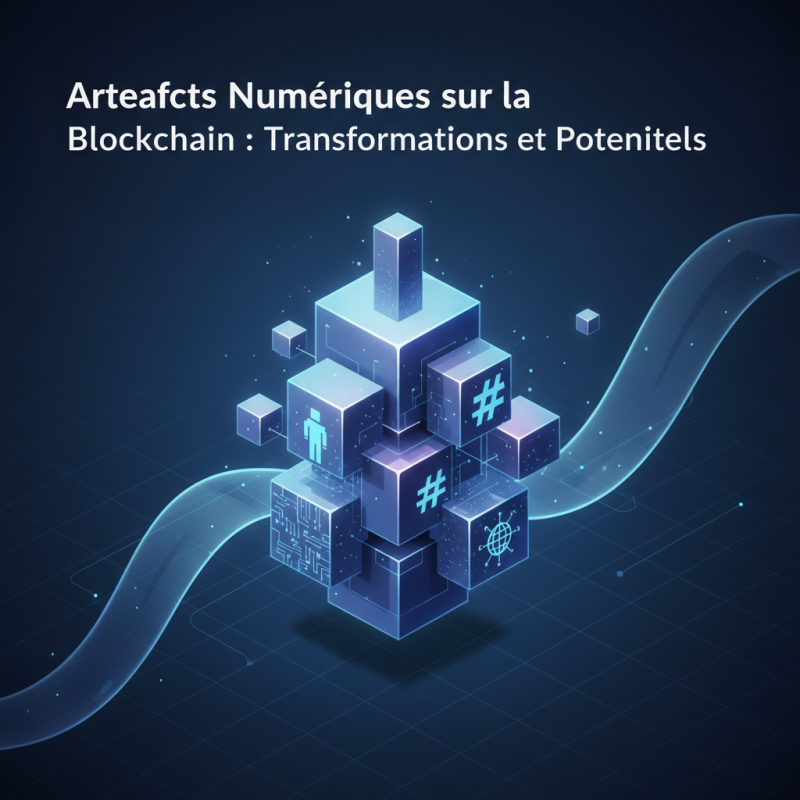
Digital Artifacts on the Blockchain: Securing Ownership and Provenance
An informative overview of how digital artifacts are recorded, secured, and valued using blockchain technology, focusing on concepts like NFTs and data immutability.
The Evolution of Digital Ownership on Blockchain
Digital artifacts—ranging from digital art and music to medical records and intellectual property—exist as intangible data. The advent of blockchain technology has introduced a revolutionary method for managing these assets, transforming how ownership, authenticity, and provenance are established and verified. By anchoring digital information onto a decentralized, immutable ledger, the blockchain provides a trustworthy framework for digital ownership.
What is a Blockchain Artifact?
A digital artifact on the blockchain is any piece of data or a representation of an asset that has been cryptographically linked to a blockchain. This linkage ensures that the history of the artifact—who created it, when it was created, and who owns it—is transparent and tamper-proof. The core value proposition lies in the immutability of the record; once an artifact is recorded, it cannot be altered without invalidating the entire chain.
Key Applications of Blockchain Artifacts
The application of blockchain to digital assets spans numerous industries, moving beyond simple cryptocurrency to encompass complex data management:
- Non-Fungible Tokens (NFTs): NFTs are perhaps the most recognized application, serving as unique, verifiable tokens representing ownership of digital or physical assets. They solve the problem of digital scarcity by providing a verifiable certificate of ownership for unique items.
- Supply Chain Management: Blockchain enhances transparency in supply chains by tracking the journey of physical goods. This ensures that artifacts, such as organic products or high-value components, maintain an unbroken, verifiable history from origin to consumer.
- Intellectual Property (IP) Management: Artists and creators can use blockchain to register their works, establishing undeniable proof of copyright and managing licensing agreements through smart contracts, automating royalty payments.
The Security Advantage
The security derived from blockchain lies in its decentralized nature. Instead of relying on a single central authority (like a bank or a single database) to validate ownership, the blockchain distributes the record across a network of participants. This decentralization mitigates the risks associated with single points of failure and fraud, making digital artifacts significantly more secure and trustworthy for all parties involved.
Conclusion
Digital artifacts on the blockchain represent a paradigm shift from centralized, easily mutable records to decentralized, verifiable truths. As technology matures, the integration of these artifacts promises greater security, enhanced trust, and new economic models for the digital creative and ownership economies.